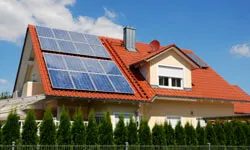
The math is simple, even if the tech sounds futuristic. The Obama administration funneled over $80 billion into clean energy via the American Recovery and Reinvestment Act. That money didn’t just vanish into bureaucracy. It accelerated a shift that’s no longer optional: green construction. Non-renewable resources are getting scarcer. Prices are climbing. If you want your home to stay affordable to run, you need to look at how it consumes power.
Solar panels might seem like the obvious answer. They work. But they are just one piece of the puzzle. Green construction is a broad umbrella. It covers everything from high-efficiency appliances to geothermal heating systems. The goal is the same: lower your carbon footprint while keeping your bank account intact. Sure, the upfront cost can sting. Paint made from milk? Glass that tints itself? It sounds like science fiction. But these materials exist today. They are available for your next renovation.
Why wait for the future of building when the future is on shelves right now? Let’s start at the top. Literally.
10: Cool Roofs
Your roof is the largest single surface of your home. It takes a beating from the sun all day long. Traditional dark shingles absorb heat. A lot of it. That heat radiates into your attic. Your HVAC system has to work harder to push it back out. You pay more for electricity. The roof gets hotter. The cycle continues.
Cool roofs break that cycle.
The technology is straightforward. It relies on high solar reflectance and thermal emittance. In plain English? The roof reflects sunlight instead of absorbing it. It releases heat quickly once the sun goes down. This keeps the attic cooler. Your air conditioner doesn’t have to run as often. You save energy.
You don’t need to tear off your entire roof to see benefits. There are options for different budgets and styles.
- Cool Shingles: These look like standard asphalt shingles. They have special reflective granules embedded in them. You can’t tell the difference until you measure the temperature difference.
- Cool Coatings: If you have a flat roof or a metal roof, a reflective coating is a cheap, effective upgrade. It’s like painting your house in a light color, but specialized for heat reflection.
- Metal Roofs: Metal naturally reflects heat better than asphalt. If you are replacing your roof anyway, consider a light-colored metal option. It lasts longer and saves energy.
The savings add up. Studies show cool roofs can reduce cooling energy use by 10 to 15 percent. In hot climates, the difference is stark. Your comfort improves too. Hot attics are miserable. A cooler roof means a cooler house.
Is it worth the cost? For most homeowners, yes. The materials aren’t significantly more expensive than standard options. The labor is the same. You pay a bit more for the reflective granules, but the ROI comes through lower utility bills. Over the lifespan of the roof, you likely come out ahead.
Safety note: If you are DIY-ing a roof coating, ensure the surface is clean and dry. Moisture traps lead to mold and peeling. Use proper fall protection. Roofs are steep, slippery, and dangerous. Don’t cut corners on safety gear.
This isn’t
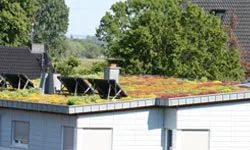

Standard asphalt shingles don’t just sit there. In the peak of summer, they absorb radiation like a sponge. Dark surfaces can hit 150°F (65.5°C) when the sun beats down. That is hot enough to warp materials and bake the attic space. A cool roof changes that dynamic completely.
These systems are engineered for high solar reflectance and low thermal emittance. They bounce sunlight back into the atmosphere rather than absorbing it. The result? Roof temperatures drop by more than 50 degrees compared to traditional options.
How cool roofs lower indoor temperatures
The savings aren’t just on the shingles. They are in the thermostat. By keeping the roof surface cooler, the heat transfer into the building envelope slows down significantly. This reduces the load on your HVAC system. Less running time for the compressor means lower electricity bills. It also means fewer emissions from power plants.
Cool roofs work by reflecting intense heat away or trapping conditioned air inside. You don’t need a total tear-off to get started. Several materials offer this benefit:
- Reflective coatings: Special paints can be applied to existing roofs to boost reflectivity.
- Cool shingles: New asphalt shingles with granules that reflect infrared light.
- Tiles: Clay or concrete tiles that naturally shed heat.
Mitigating the urban heat island effect
There is a broader environmental argument here too. Cities suffer from the urban heat island effect. Paved surfaces and dark roofs absorb heat during the day and release it at night. This keeps suburban and urban areas dramatically hotter than rural surroundings.
Cool roofs disrupt that cycle. By reflecting sunlight, they help lower ambient air temperatures in dense areas. This is a practical solution for homeowners who want to reduce their carbon footprint without sacrificing comfort.
9: Green Insulation
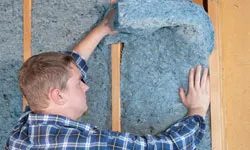
Let’s be honest. Traditional insulation is a nightmare to install. You get fiberglass shards embedded in your skin, your lungs itch, and you look like you’ve been in a fight with a snow cone. It’s messy. It’s uncomfortable. And since it ends up buried inside your walls, out of sight and out of mind, why settle for the stuff that makes you sneeze for three days?
There is a better way. Green insulation uses recycled materials to line our homes, turning waste into warmth.
The Denim Factor
Cotton insulation is one of the cleanest options on the market. That soft blue batt you might see in a hardware store is primarily made from recycled denim. Yes, old jean scraps.
Think about your favorite pair of worn-out jeans. They are tough, durable, and naturally breathable. Now imagine that material filling your attic or cavity walls. It doesn’t just keep heat in; it keeps noise out. Unlike fiberglass, cotton insulation doesn’t itch. It doesn’t release airborne particles that irritate your eyes or throat. You can handle it with bare hands (though gloves are still smart) and sleep soundly knowing your walls are lined with something that won’t hurt you.
The Newspaper Solution
Cellulose insulation takes the recycling concept a step further. The primary ingredient? Newspapers.
This isn’t just loose paper dumped into a hole. Recycled paper insulation is processed into dense, effective batts or loose-fill. The most common application is blow-in cellulose. A specialized machine blows the material into wall cavities or attic spaces, filling every nook and cranny. It settles tightly, creating a barrier that is significantly better at preventing airflow than standard fiberglass.
The Energy Math
Why is cellulose considered superior to fiberglass from a green perspective? It comes down to energy intensity.
Melting down glass to create fiberglass insulation requires massive amounts of heat. It is an energy-intensive process. Turning shredded paper into cellulose insulation takes far less energy. The result is a product with a much lower carbon footprint during manufacturing.
The recycled content percentages tell the story clearly:
Cellulose insulation often consists of 75 to 85 percent recycled material.
Compare that to fiberglass, which typically contains only 30 to 40 percent recycled content. Even when fiberglass includes recycled glass, the overall environmental impact remains higher due to the production method.
Health and Performance
When you compare cellulose and cotton against traditional fiberglass, the differences are stark.
Airflow Control
Cellulose is denser. It settles into irregular spaces, sealing gaps that fiberglass batts might leave open. This reduces drafts and improves overall energy efficiency.
Health Safety
Fiberglass releases tiny glass fibers that can become airborne. Inhaling them is bad. Getting them in your skin is worse. Cellulose and cotton do not pose these health concerns. They are safer to install and safer to live with once the job is done.
Thermal Performance
While R-values vary by product density, cellulose’s ability to resist air movement often translates to better real-world performance than fiberglass, which can sag or shift over time.
If you are planning a renovation, green insulation offers a practical alternative to the messy, energy-heavy standard. You get better air sealing

We spend so much time on the build phase that we rarely look at what happens when materials reach their end of life. Tearing down a structure creates waste. Usually, that waste ends up in a landfill, leaching chemicals into the soil. But if you choose biodegradable materials, the disposal process changes. Instead of a toxic scrap heap, you get products that degrade naturally.
Take paint. Old-school milk paint was made from milk protein, lime, and mineral pigments. Today, companies like The Old Fashioned Milk Paint Co. still use that exact recipe. It’s organic. It’s non-toxic. And when it finally peels, it doesn’t poison the ground.
Using recycled materials is a good step. Recycled fiberglass insulation, for instance, keeps trash out of landfills. But it doesn’t break down. It just sits there. Biodegradable materials are better because they return to the earth without releasing toxins.
Outside the U.S., hemp is everywhere in construction. It’s used for foundations. It’s used for insulation. Here, industrial hemp (the low-THC cousin of marijuana) is largely banned from growth. But some companies are importing it to make Hemcrete. This is a mix of hemp and lime. It’s similar to concrete. It’s sustainable. And it’s one of many options for the eco-conscious homeowner.
Rammed Earth Brick
Hemp isn’t the only structural material that’s been around for millennia. Look at rammed earth. It’s an ancient technique, similar to adobe, that uses raw earth to build sturdy walls. The Great Wall of China used this method. The process hasn’t changed much since then.
You take a moist mix of earth, clay, and gravel. You add a stabilizer, usually concrete. Then you compress it into forms. The result is dense, hard walls. But you have to wait. Rammed earth needs months, sometimes up to two years, to cure completely. It needs a humid climate to harden properly.
Why bother? Density. Rammed earth regulates temperature. It keeps your house cool in summer and warm in winter. It also produces fewer emissions than standard concrete construction. Modern equipment makes compacting easier, but you can still do it by hand with special tools.
It’s not the norm today. Most contractors won’t touch it. But specialists exist who design homes using Earth’s minerals. The catch? You have to manage water carefully. If it seeps in where it shouldn’t, it damages the structure. That’s why many green builders pair it with storm water management systems.
Storm Water Management
In rural areas, heavy rain carves up land. It washes away plants. In cities, it’s worse. Overflowing sewer systems flood streets. They damage property. They create hazardous driving conditions. That’s the power of storm water. It’s dangerous if left unchecked.
Storm water management is about controlling that volume. The U.S. Environmental Protection Agency (EPA) pushes for “green infrastructure.” This means using plants and soil to absorb and purify water in urban areas.
The benefits are concrete. Green infrastructure reduces the “heat island” effect. Asphalt and metal absorb heat. Plants don’t. They lower urban temperatures. They also reduce sewer overflow by absorbing rainwater before it hits the grid. As water passes through soil and plants, pollution is filtered out.
More green cover means less runoff. Plants also improve air quality by absorbing carbon dioxide. The EPA lists several techniques for this.
- Plant boxes: Small installations of dirt and greenery along sidewalks.
- Green roofs: Roofs entirely covered in vegetation.
- Permeable pavements: Materials that let water flow down to the sediment layer.
These aren’t just theoretical. They’re practical solutions for homeowners and municipalities alike.
Geothermal Heating
If storm water management uses plants to handle water, geothermal heating uses the Earth to handle energy. It’s a renewable resource. Like solar or wind, it’s far cleaner than coal or natural gas.
You might think cold weather kills geothermal efficiency. It doesn’t. Pipes buried a few feet underground avoid freezing. The ground stays around 60°F (15.5°C) year-round. It’s warm in winter. It’s cool in summer.
A water and antifreeze mix circulates through these buried pipes. It collects thermal energy. Then it goes to a heat pump. The pump uses that energy to heat or cool your house. Yes, it takes electricity to run the pump. But the efficiency is so high that you get more energy out than you put in.
There’s a downside. Digging up your yard to lay those pipes is a massive undertaking. It’s expensive and disruptive. But for those willing to do the work, the long-term payoff is significant.
And unlike the next technology on this list, geothermal requires no roof space or sunny exposure. It just needs ground.
Active vs. Passive Solar Design
Picture a field of giant panels. That is active solar. It is not the only way to go. Passive solar design uses the sun itself as the heater. You do not need expensive equipment for this. You just need smart placement of windows. Large windows capture the rays. A dark, dense wall inside absorbs that heat. Then, fans or vents move the warm air around the room.
Active systems are more powerful. They use panels to heat water or air directly. This cuts down on gas and electric bills. It also reduces greenhouse gases. Efficiency depends on your climate and system size. But if you have the right conditions, the initial cost pays off. You get years of free energy after that.
The Rise of Electrochromic Smart Glass
Passive solar needs windows to work. In summer, you want those windows to block the sun instead. Awnings help. Shades work too. But there is a better option. It is called smart glass. Or electrochromic glass.
It uses a tiny burst of electricity. This charges ions on the glass layer. The glass then changes how much light it reflects. Low-emittance windows already exist. They block some radiation. Smart glass lets you choose the level of tint.
Large buildings could link these windows to control systems. They tint automatically during hot peak hours. They clear up in the evening. Developers predict a 25 percent drop in HVAC costs. The technology is still maturing for commercial use. But it will become common soon. Competing firms are racing to bring it to the market.
Smart Appliances
Your fridge is getting smarter. So is your washing machine. These devices connect to your home network. They use data to save energy. Some can run during off-peak hours. This lowers your bill. Others monitor usage patterns. They adjust power settings automatically.
Look for appliances with energy star ratings. Check for Wi-Fi connectivity. These features add cost upfront. But they save money later. You control them from your phone. You can start a load while at work. You can check if the oven is off from the grocery store.
Integration is key. Make sure your appliances talk to each other. A smart thermostat can adjust based on your washer’s cycle. A smart fridge can order milk. It creates an ecosystem. One that works for you. Not against you.

Connecting Your Kitchen to the Grid
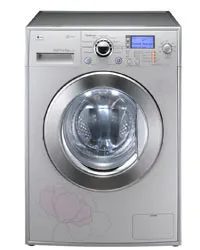
You don’t need a robotic assistant to make your kitchen work harder for you. The shift toward smart appliances isn’t about sci-fi fantasies; it’s about efficiency. LG’s 2011 CES lineup showed exactly where the industry was heading: appliances that talk to the power grid.
SmartGrid refrigerators, dishwashers, and washing machines connect directly to smart meters. These meters track real-time energy usage and share data with your devices. The result? Your appliances can read the market. They run when electricity rates drop, automatically lowering your bill without you lifting a finger.
Inventory Management and Mobile Integration
The hardware is changing, too. We’re seeing computer-level tech inside standard units. LG’s smart fridge features an LCD screen. You can log expiration dates and track stock levels. The system alerts you when milk is souring. It syncs with your smartphone, turning your fridge contents into a live shopping list. No more guessing what’s in the back of the door.
But the real win isn’t convenience. It’s the drop in energy consumption. These features feed into a larger goal: the zero energy home.
Understanding the Zero Energy Home
A zero energy building, or zero net energy building, operates off the standard electric grid. It generates its own power through renewable sources. The “zero” means two things: net energy consumption is zero, and carbon emissions are zero. Solar and wind power make this possible.
These homes rely on extreme efficiency first. You need top-tier insulation. Passive solar design helps regulate temperature. But design alone isn’t enough. You still need active power generation. Solar panels are the most common solution. Wind collectors work in windy climates. Some builders use biofuels for heating needs.
Small communities benefit most. Sharing renewable resources across multiple homes boosts overall efficiency.
Costs and Incentives
Building a zero energy home is difficult. It’s also expensive. High upfront costs keep it niche. Governments are trying to change that. Subsidies aim to offset the initial price tag.
In the U.S., the Solar Investment Tax Credit covers 30% of the total system cost. California goes further. Residents get additional rebates for choosing renewable energy options.
The reward is a home that barely impacts the environment. It’s a blend of technology and design that outperforms standard construction. The savings accumulate over time. The carbon footprint shrinks. You’re left with a house that runs itself, mostly.
What happens when the grid goes down? Or when the batteries fail? You’ll still have light. Maybe. If you planned for it.