Vacuuming up dog hair in the living room is standard maintenance. It’s dry. It’s easy. Scrubbing bacteria, mold, and mildew from the toilet and sink is a different beast entirely. Bathroom cleaning is a dirty job. Someone has to do it. If that someone is you, you need the right gear. The goal here is simple. Make the task tolerable. And yes, these tools are cheap. You won’t go broke doing it.
5: The Toilet Wand
You can get on your knees. You can use a sponge. You can scrub until your knuckles bleed. Or you can spend a few extra dollars on a toilet wand. This tool lets you reach the darkest depths of the bowl without leaning in close. It keeps your face away from the splatter. It also helps clean the tank if you ever decide to open it up.
There are two main types. Disposable heads. Reusable ones. The disposable version stops the handle from sitting in a cup of dirty water. No more grody residue on your grip. But there is a catch. Plastic waste adds up. If you care about the planet, this isn’t a green choice. You might need to buy carbon offsets to balance the guilt.
Carbon offsets are tax-deductible donations that support carbon reduction projects, like renewable energy and reforestation.
4: Grout Brush
Grout holds dirt. It holds mold. It holds everything you don’t want in your shower. A standard sponge slides right over it. A grout brush digs in. You need stiff bristles. Nylon works best for tile. Natural bristles might fray too fast. The handle should have a grip that doesn’t slip when wet. Rubber is good. Plastic can be slippery. Angle the head so you can reach the corners of the tub. Straight lines are easy. Curves are where the grime hides. Push hard. The brush does the work, not your arm muscles.

Grout is the silent martyr of your bathroom. While the tiles themselves are hard, nonporous, and built to handle water, the grout sitting between them is a different story. Unless you applied a high-quality penetrating sealer during installation, that cement-based material remains porous. It acts like a sponge, soaking up the oils from soaps, shampoos, and body lotions.
That trapped moisture and organic residue create a breeding ground for mold and mildew. You can scrub the tiles until they shine, but if you ignore the joints, the black specks will return. You need a grout brush to tackle this specific problem. These brushes have stiff, narrow bristles designed to dig into the recesses without scratching your ceramic or porcelain surfaces. A standard sponge just glides over the top; a grout brush gets in there.
The Gloves Question
You probably have a system for cross-contamination. One sponge for the sink. One rag for the tub. Paper towels for the toilet. That’s good hygiene. But if you are wiping all that with bare skin, you are missing the most basic layer of protection.
Bare hands absorb bacteria, dead skin cells, and cleaning chemicals. It’s not just about picking up “grubby stuff,” though that’s a fair description. It’s about preventing dermatitis and “dishpan hands” if you’re also using harsh degreasers. Wear rubber gloves. They are cheap, effective, and non-negotiable for a serious clean.
If you want to go full-on Howard Hughes—yes, the germophobe tycoon—you might even toss on protective eyewear. Why? Because squeegees slip. Bubbles burst. A splash of bleach or ammonia up in the eye is a trip to the ER that you don’t need.
The Mop: Don’t Overlook the Floor
We spend minutes on the mirror and the toilet, but the floor takes the abuse. Dust, hair, and dirt accumulate daily. Using a mop is the only way to lift that debris rather than just pushing it around with a broom.
When choosing a mop for a bathroom, consider the material. Microfiber heads trap dust better than string mops, which can just spread wet grime. You’ll need a bucket with a wringer to keep your cleaning solution effective. If you’re dealing with hard water stains on the floor, a vinegar-water mix works wonders, but test it in a corner first.
The floor is also where you’ll find the most mold-prone areas if your ventilation is poor. Look behind the toilet and under the vanity. Those spots are hard to reach with a flat mop head. You might need a smaller brush or an old toothbrush for those tight corners. It’s tedious, but skipping it means the mold grows back faster.
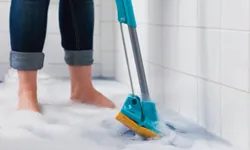
If your bathroom is the size of a closet, a sponge might suffice. Most of us, though, have enough square footage to spare our spines. A mop isn’t just a luxury there; it’s a structural necessity.
Twist mops with replaceable heads win the practicality contest. You control the moisture level. Squeeze out the excess water before you even touch the tile. When the head looks like a gray rag that’s seen too much, toss it. No washing. No drying. Just swap and go.
Don’t forget the ceiling. Dry mops pick up cobwebs in those remote corners where the light rarely reaches. For the high-tech crowd, electric floor cleaners exist. They do the scrubbing. You just push.
Why the Scrub Brush Is Your Best Bet
A mop slides over the dirt. It doesn’t remove it. For soap scum, you need friction.
The scrub brush is the most versatile tool in the bathroom arsenal. It attacks the bathtub where body oils and shampoo residue build up into a stubborn film. It also handles the sink. Unless you’re in the habit of rinsing the basin after every single use, toothpaste and soap leave a dried ring. A brush breaks that bond.
It reaches where mops can’t. Behind the toilet? Yes. Between the vanity cabinets? Absolutely.
Material matters here. Synthetic bristles last longer. They don’t degrade as fast in damp environments. Natural bristles are softer. They’re less likely to scratch delicate surfaces like acrylic tubs or polished stone. If you’re unsure, start with synthetic. They’re cheaper to replace.
Plug it in if you have an electric scrubber. These tools provide consistent scrub power. You don’t need elbow grease. Just hold the device and let the motor do the work. It’s faster. It’s easier. And it gets into the grout lines that a hand brush often misses.
The Decision Is Simple
You need both tools. The mop handles the surface. The brush handles the stain.
Which one do you reach for first? Depends on how much buildup you’re dealing with. If it’s daily maintenance, the mop wins. If you’re doing a deep clean, the brush takes the lead.
There’s no perfect balance between speed and effort. Just a mop and a brush. Keep them clean. Replace the head when it’s frayed. Use the electric version if your back complains. Otherwise, stick to the manual tools. They’re reliable. They’re affordable. And they actually work.