Pneumatic nail guns dominate the home renovation market for a reason. They offer consistent power and are generally more affordable than their battery or gas-powered counterparts. But understanding how they actually drive a nail into hardwood requires looking under the hood. Specifically, you need to understand the relationship between your air compressor and the tool in your hand.
The Source: Compressed Air Generation
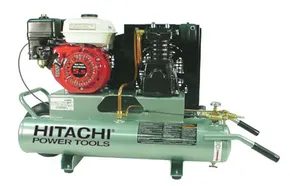
You cannot use these tools without a compressor. The nail gun itself does not generate power. It receives compressed air from a separate unit.
Think of a standard air compressor like a water pump. It uses piston cylinders to move air.
– On the upstroke, it draws in atmospheric air.
– On the downstroke, it pushes that air out.
This creates a steady stream of pressurized air. The air travels through a hose and enters the nail gun’s air reservoir. This reservoir acts as a buffer. It holds enough pressure to fire multiple nails before the compressor needs to kick back in and refill the tank.
The Internal Mechanics: Pistons and Valves
Inside the gun, the mechanism mirrors that of a solenoid nailer. A sliding piston drives a long blade. This blade hits the nail, forcing it into the wood.
The motion depends entirely on air pressure differentials.
– If pressure is higher above the piston head, the piston is forced downward.
– If pressure is higher below the piston head, the piston stays up.
The trigger mechanism is simply a way to shift this balance. It channels the compressed air to change which side of the piston has the upper hand.
The Valve Plunger: A Step-by-Step Breakdown
Let’s look at what happens when the trigger is released. This state is critical for safety and reset.
- A movable valve plunger sits above the piston head.
- When the trigger is not pulled, compressed air flows to both sides of this plunger.
- Air flows directly from the reservoir to a lip at the bottom of the plunger.
- It then passes through the trigger valve and a small plastic tube.
- Finally, the air reaches the area above the plunger.
Since air reaches both sides, the pressure initially balances out. However, a spring pushes the plunger downward. This spring force shifts the balance.
When the trigger is released, there is always greater pressure above the plunger than below it. This keeps the piston in the ready position, waiting for the next pull.
This design ensures that the gun doesn’t fire accidentally. It also means the tool is ready for the next shot immediately after firing. The spring resets the valve. The compressor refills the reservoir. You are back to square one.
Why This Matters for DIYers
Knowing this helps you troubleshoot. If your nails aren’t driving deep, check the compressor output. If the gun cycles too fast or jams, the valve plunger might be dirty. The small plastic tube can clog with moisture or debris.
You don’t need to be an engineer to maintain a pneumatic nailer. Just keep the air dry and the valves clean. The rest is simple physics.
But what happens when you need to drive a nail without an air hose? That’s where the next generation
The Mechanics of the Power Stroke
That pressure imbalance is the secret sauce. It keeps the plunger jammed against the seal around the piston head. The compressed air in the line hits that blocked top of the piston and simply can’t push down. It’s stuck.
Pull the trigger, and the whole dance changes.
The trigger valve snaps shut to the air line and opens a tiny escape route to the atmosphere. No air gets to the area above the plunger now. What happens below? Pressure spikes. It’s higher there than above. The plunger gets lifted up by that force.
Suddenly, the compressed air has a clear path to the piston head. It blasts down. The piston drives the blade forward. The nail shoots out of the chamber with serious force. This is how pneumatic nail guns handle thick nails in hardwood. They’re powerful. Reliable.
But there’s a catch. You are tethered to a bulky air compressor. Dragging that around the job site is a pain. It’s cumbersome. You need hoses. You need power outlets.
As the piston slides down, it compresses the air inside the cylinder. That air gets pushed through a series of holes into a return air chamber. The pressure in that chamber builds up. It’s stored energy waiting to be used.
Release the trigger, and the cycle resets. Compressed air pushes the plunger back into its blocked position. The flow to the piston head is cut off again. No downward pressure.
Now the stored air in the return chamber takes over. It pushes the piston head back up. The air that was above the piston gets forced out of the gun and into the atmosphere. You’re ready for the next nail.
So why do you need an external air compressor for a pneumatic nail gun?
The design relies entirely on high-volume air pressure to drive the heavy piston. Without that constant supply from a compressor, the tool can’t generate the force needed to drive nails into dense materials. It’s a trade-off. You get power, but you lose mobility.
If you want power without the hose, you need a different design. One that doesn’t rely on an external air source.