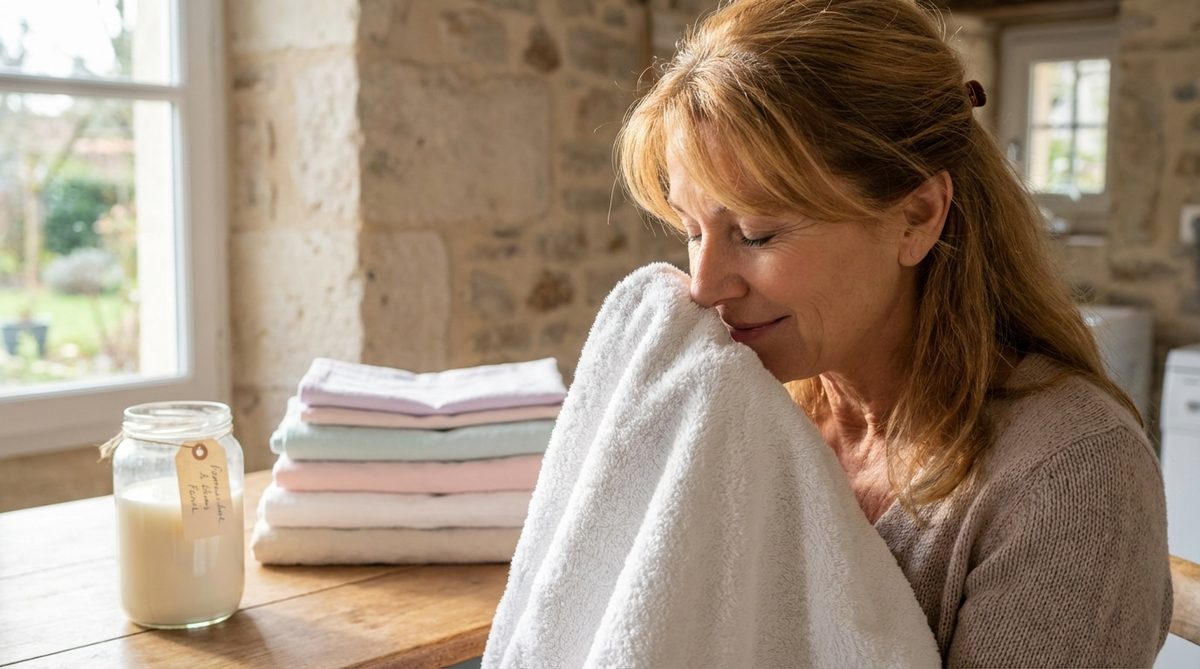
The towel feels like sandpaper. The sheet is placed tightly against the skin. The chemical scents of commercial fabric softeners can cause headaches. It’s a frustrating cycle. Expect luxury when you buy products. Instead, you feel stiff and irritated. Repeated cycles of overdosing to solve the problem only make the situation worse.
There is a better way. No need for expensive boutique brands. Three items must be removed from the kitchen or bathroom cabinets. This mixture works exactly like commercial fabric softener. It fits into your existing daily routine. It costs a fraction of the price. And it actually addresses the root cause of stiff fibers.
Why commercial fabric softeners fail
Although commercially available fabric softeners claim to be “fresh”, they never achieve this effect. They coat fabrics with silicone and surfactant. This creates a slippery feel. It doesn’t solve the basic problem. The problem is rarely in the fabric itself. It is usually the water and the detergent you use.
Hard water is the silent enemy of soft clothes. Minerals such as calcium and magnesium bind to the fibers. This process is called scaling. Minerals build up over time. Clothes become stiff. It feels like cardboard. Detergent residues make the problem worse. If you add too much detergent, you won’t be able to wash it off completely. It’s still stuck inside the fabric.
The paradox of commercial fabric softeners is that they can make the situation worse. This can leave extra residue in the washing machine drum. This locks in odors. The dispenser compartment may become clogged. Especially in towels, this coating can reduce their water absorption. The towel becomes less of a drying tool and more of an obstacle.
The real cause is often hard water minerals and excess detergent residues.
Three-ingredient solution
This DIY fabric softener targets water hardness and regulates fibers directly. Complex chemical reactions are not required. Mix in a few minutes. The materials are common household items.
The exact current ratios are:
500 ml hot water
White vinegar 150ml
regular hair conditioner 100 ml
Each component has a specific role. White vinegar neutralizes the alkaline residues left in the laundry detergent. It also helps dissolve calcium deposits. Hot water acts as a carrier, mixing the mixture evenly. The hair conditioner provides that soften textile fibers.
Action of ingredients
You may wonder why hair conditioner is in a laundry mix. Hair and fabric fibers have a similar structure. The conditioners are designed to smooth the cuticles of the hair. Forms a thin layer to reduce friction and static electricity. The same principle applies to the cotton and linen blends in your wardrobe.
Vinegar is the main active ingredient. Breaks down minerals accumulated in hard water. It also balances the pH of the rinse water. This ensures that detergent residues are thoroughly washed away. When the mixture goes through a drying cycle, the smell of vinegar disappears completely. It doesn’t smell like vinegar. It smells like clean clothes.
Choose the right conditioner
Not all conditioners are designed for this purpose. The type of conditioner you choose will determine your results. Avoid heavy silicone-based formulas. These are designed for dry and damaged hair. It leaves an oily film on the towel. This film blocks absorption. It is counterproductive for kitchen or bath linens.
I’m looking for a classic basic conditioner. It should wash out of your hair easily. Since you can wash your scalp easily, you can also wash your sheets easily. Avoid using “2-in-1” shampoos. They often contain strong surfactants that strip the conditioning benefits. A simple moisturizing conditioner that gives just the right amount of glide without being too thick.
Application and Usage
Using this DIY mixture is the same as using commercial fabric softener. Pour the mixture into the fabric softener dispenser of your washing machine. Do not apply directly to clothing. The dispenser releases it during the final rinse cycle. This time is important for the ingredients to work properly.
If your machine does not have a dispenser, you can pour it manually during the rinse cycle. However, dispenser method are more consistent. Use the same amount as commercially available fabric softener. Start with the recommended dose. If the water is very hard, adjust it slightly.
Safety and Storage Considerations
Mixing vinegar and conditioner requires knowledge of chemistry. Vinegar is acidic. Conditioners are usually alkaline or neutral. Mixing can cause a reaction. Texture and color may change due to mixing. This is normal. This does not mean that the product is bad. The efficacy remains intact. The acidic vinegar neutralizes some of the conditioner, but it’s still enough to soften the fabric.
Store the mixture in an airtight container. It will last for several weeks. Check it periodically. If you notice separation, shake the bottle before use. The hot water during preparation keeps the ingredients initially emulsified, but may require stirring for long-term storage.
When to stop
This method is ideal for cotton, linen and synthetic fiber blends. It is less effective on delicate fabrics such as silk and wool. These materials require special care. Do not use this mixture in waterproof equipment. Over time, conditioners weaken the waterproof coating.
Always be careful with high-performance athletic wear. While the goal of being silicone-free is a good thing, excessive conditioning can reduce moisture-wicking properties. It is mainly used for everyday use, bedding, towels, etc. Its purpose is to remove hardness caused by hard water and detergent build-up. The result is laundry with a natural texture. Breathe better. They last longer without the accumulation of chemicals that shorten the life of clothes.
We’ve taken the guesswork out of softening. You have controlled the ingredients. The hardness is gone. The scent is neutral. The machine is now cleaner. The only question is how many loads can you run before you run out of conditioner.
DIY fabric softener: How to mix and use it correctly
Two things are important for the proper use of DIY fabric softener : order and texture. Don’t just throw stuff in a bottle and hope it works. A clean, sturdy container is required. A 1 liter bottle is enough. Start with hot water. Next, add white vinegar. Finally, pour in the conditioner. Shake vigorously. You’re looking for a smooth, even liquid. If you skip this step, the conditioner will sink to the bottom. This will messes up your dosage. It ruins the mix.
The clear bottle helps you see if it separates too quickly. What if it’s too thick? Add a little hot water. Don’t change the ratio. Just make it thinner.
Pouring the right amount is more important than the right amount
The recommended amount is 2-3 tablespoons at a time. that’s it. Most washing machines can handle this fine. Prevents oversaturation. Generally, longer cycles provide better results because they rinse better. Is the cycle short? Stick to the lower end of this dose. Don’t crank it up. Use a small amount, rinsed out properly, beats a heavy dose Always.
This blend is suitable for everyday clothes, sheets and towels. Be careful with technical fabrics. Synthetic materials can cause odors if used excessively. The goal is softness and no residue.
Adjusting for Hard Water and Delicates
Not all clothing is created equal. If the water is hard, the minerals fight against the softener. In this case, rinse first. Reduce the use of detergent. Next, adjust the softener. Don’t just add a DIY mix. The best way is to use less detergent, more fabric softener and the right amount of fabric softener.
For towels, you want them to be soft, but not at the expense of absorbency. Use no more than 2 tablespoons. The enemy here is too much detergent. Towels must be breathable.
If you use sports equipment or synthetic materials, go lighter. Residues on these fabrics can trap odors. If you’re not sure, start small. Test on a few items.
Safety warnings and storage tips
Never mix with bleach. Vinegar and chlorine can produce toxic fumes. Keep them in separate cycles. Always.
Delicate fabrics such as wool and silk require special care. This homemade recipe can be used on cotton and everyday fabrics. Reduce or skip the dose when handling something fragile. Safety first.
Are there signs of overuse? Check the deposit in the drawer of the dispenser. Feel that “crusty” texture on the fabric. Smell an overpowering scent. Your clothes can’t breathe. Fix it with a quick empty cycle or extra rinse. Reduce the amount next time.
If the mixture separates in the bottle, shake well before use. Make sure the bottle is clean. Keep tightly closed and away from heat sources. Clean the dispenser compartment regularly. A dirty machine can ruin a good recipe.
The Daily Payoff
The results are show up wash after wash. The fabric feels softer. Sheets are pliable. The scent is very clean and not a chemical smell. It doesn’t stay in the room. Softness is achieved by reducing mineral build-up and less detergent residue.
The real win is consistency. Hard water makes washes vary wildly. This mixture stabilizes this. The scent lasts longer than regular commercial products, but remains subtle.
It’s also cheap. Ingredients last. The dosage is small. You’re not buying specialized products. Keep the machine clean. Less limescale build-up means less maintenance. Overall, the amount of detergent used is reduced. This means cleaner clothes, not just smellier clothes.
The routine is simple. Mix the base. Shake well before use. Pour 2-3 tablespoons into the drawer. Keep detergent light. Rinse thoroughly.
When your clothes are really clean and smelling good, the rest will fall into place. Do you really need more products or is it just a better balance?