Stop guessing why your toaster or fan died. A continuity tester is the simplest, cheapest way to find out if a wire is broken or if a switch is shot. You don’t need an engineering degree. You just need to know how to keep your hands off live wires.
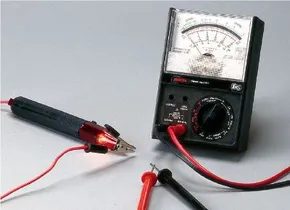
This tool is built for one job: checking if electricity flows through a circuit. It uses a small battery inside a plastic case. One side has a probe. The other has a wire with an alligator clip. When you connect them properly, the circuit closes. If the path is clear, a light turns on. Or it buzzes. If nothing happens? The path is broken. That’s it.
The Golden Rule: Power Off
Here is the part where people get hurt. Do not plug this thing into a wall outlet while it’s running. Do not test anything while the appliance is plugged in.
Caution: Always unplug the appliance or turn off the circuit breaker before testing.
You are testing for continuity, not voltage. You need a dead circuit. If you use a continuity tester on a live wire, you’ll fry the tester. Or worse, you’ll shock yourself. The battery inside is weak. It doesn’t care about the 120 volts in your wall. It will fail. Hard.
So, unplug first. Disassemble next.
Step-by-Step Testing
- Unplug the device. Pull the cord from the wall. If it’s hardwired, flip the breaker.
- Open the casing. Remove the screws. Set them aside so you don’t lose them. You need access to the component you’re testing. Maybe it’s a switch. Maybe a heating element. Maybe just a loose wire.
- Identify the connection points. Look for two points on the component. One is where power enters. The other is where it leaves.
- Attach the clip. Clamp the alligator clip onto one connection point. Make sure it’s tight. A loose clip gives a false reading.
- Touch the probe. Press the metal probe against the second connection point.
- Watch the result.
- Light/Buzz: The circuit is complete. The component is likely fine. The break is somewhere else.
- No Light/No Buzz: The circuit is open. The component is faulty. Replace it.
- Dim Flicker: The connection is poor or the component is degrading. Replace it. Don’t trust it.
Why This Matters
You’re trying to pinpoint the cause of a problem. Is the bulb burnt out? Or is the socket dead? Is the switch broken? Or is the wire snapped inside the housing?
A continuity tester answers that. It tells you if electricity can flow. It doesn’t tell you if the appliance is working correctly under load. But it tells you if the path exists. If the path doesn’t exist, no amount of tweaking will fix it. You need a new part.
What If It’s Not the Component?
Sometimes the component is fine. The wire leading to it is broken. Or the plug is loose. Or the outlet in your wall is dead.
If your