
Most homeowners don’t realize that heating and cooling drain more than half their energy budget. The Department of Energy puts the number at 56 percent. That is a massive leak in your wallet. Green technology aims to plug that hole. It isn’t just about saving the polar bears. It’s about keeping your utility bills from skyrocketing.
Take Santa Clara University in California’s Silicon Valley. In April 2011, they installed 60 rooftop solar collectors. The goal was simple. Heat and cool the student center efficiently. Engineers built the array to handle both hot water and air conditioning. It works by grabbing sunlight and concentrating the energy. The water inside gets hot. Really hot. We are talking 200 degrees Fahrenheit.
The results were immediate and drastic. The system slashed natural gas consumption by 70 percent annually. It also kept 34 tons of carbon dioxide out of the atmosphere. The university leased the system for ten years at a fixed price. They also received over $86,000 in state rebates.
This isn’t an isolated case. Universities, businesses, and individual homeowners are jumping on board. The shift matters because it cuts greenhouse gases. It also saves money. But let’s be clear. These systems aren’t cheap.
Consider the upfront cost. Some solar collectors run between $30 and $80 per square foot for installation. You need capital. Or leverage. The government offers incentive programs to help builders and homeowners defray these costs. In 2008 alone, Americans saved over $19 billion using these methods. The trend is growing. The impact is real.
To understand what you are getting into, you need to know the difference between the two main categories. Passive and active systems.
Passive Solar Design Strategies
Passive systems don’t use machinery. They don’t rely on furnaces or air conditioners. They maximize nature’s ability to regulate temperature. It’s architectural geometry.
A classic example is the roof. White or light-colored roofs reflect sunlight. They don’t absorb it. The result is a cooler building. Less energy is needed to cool the house in summer. Windows play a role too. High-performance windows keep heat out and cool air in. You are fighting physics with design.
Active Green Energy Systems
Active designs are different. They use mechanical systems. These systems run on green energy sources. Solar power is the most common. Geothermal is another major player. Biomass energy from organic materials is a third option.
Hydronic heating systems also fall here. They circulate hot water or liquids for heating. Ice-powered air conditioners use frozen water to reduce peak daytime electricity use. These are complex. They require expertise.
Option 10: Geothermal Heating and Cooling
The list of options starts with geothermal systems. You have already seen the name drop in the takeaways. But what does it actually mean for your home?
Geothermal technology uses the Earth’s stable underground temperature. The ground stays cool in summer and warm in winter, regardless of the air above it. A geothermal heat pump taps into this stability. It transfers heat to or from the ground.
In winter, the system pulls heat from the ground and moves it inside. In summer, it reverses. It pulls heat from your home and dumps it into the cooler earth. The efficiency is staggering compared to air-source heat pumps. You are not fighting the air temperature. You are using the ground’s constant thermal mass.
The installation is invasive. You need loops buried in your yard. Horizontal loops require a large yard. Vertical loops go deep into boreholes. This is where the cost spikes. Drilling is expensive. The equipment is expensive.
But the operating cost is low. Once it is installed, the energy input is tiny compared to the heat output. It is a long-term play. You are paying for the installation to save on every bill for the next two decades.
Is it right for you? It depends on your land and your budget. You need space for horizontal loops or the capital for vertical drilling. You need a contractor who knows ground-loop systems. This isn’t a weekend DIY project.
The shift to green heating and cooling is slow. It is costly. But the savings compound. And the environmental impact is measurable. Santa Clara University proved it. You can replicate the principle on a smaller scale.
“Compared to standard heating and cooling systems, going green is better for the environment because it helps eliminate greenhouse gasses. In addition, the efficiency of these green systems allows people to save money on their energy bills.”
The technology exists. The incentives are there. The math works. The question is whether you are willing to invest the upfront capital to stop the energy bleed. Most people say no until their bill gets too high. Then they act. Don’t be most people.
Start by looking at your current system. How old is it? What is the efficiency rating? Then look at your home’s envelope. Passive strategies are cheaper than active ones. Seal the leaks. Add insulation. Tint the windows. Fix the easy stuff before you call a geothermal contractor.
The next options on the list involve biomass and hydronic systems. They offer different paths to the same goal. Reduced energy dependency. Lower bills. A smaller carbon footprint. But they come with their own trade-offs. Storage requirements. Maintenance schedules. Fuel sourcing.
You have the first piece of the puzzle
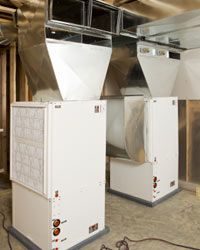

You don’t need a PhD in geology to tap into the planet’s endless energy supply. The earth is packed with heat. Deep down, it’s boiling. But for home renovation, you don’t dig that deep. Just a few feet below the surface, the ground temperature stays constant. It hovers between 42 and 80 degrees Fahrenheit year-round. That consistency is the key. A geo-exchange system leverages this stable ground temperature to heat and cool almost any building type.
Note that these systems don’t tap the molten core. They use heat pumps. The pump circulates a fluid—water or refrigerant—through underground wells. In winter, that fluid absorbs the earth’s warmth and brings it indoors. In summer, the process flips. It pulls heat out of your house and deposits it back into the ground.
9: Passive Solar Design
The sun provides free, renewable energy. You don’t need ugly solar panels to benefit. Passive solar design uses natural heat transfer. No moving parts. Minimal upkeep. It relies on the building’s own structure—walls, floors, windows—to collect, store, and release solar energy.
It isn’t a complete standalone solution. You still need mechanical backup. A forced-air system or radiant flooring handles the heavy lifting for cooling in summer and warming in winter. But the passive elements reduce the load.
The easiest DIY-friendly version is “direct gain.” Sunlight streams through windows. The glass converts light to thermal energy. Dark walls and floors absorb that heat. They store it. As long as the air inside stays warm, the house holds onto that energy. At night, when the temperature drops, the walls radiate the heat back into the living space.
For a slightly more technical approach, builders can install metal or plastic water pipes inside walls. Sunlight hits the exterior. The water inside heats up. You pump that warm water through the house. It acts as a heat source. It’s simple physics. It works.
8: Active Solar Systems
Some homeowners don’t mind the roof real estate. Active solar uses photovoltaic (PV) cells. These materials convert sunlight directly into electricity. That power can run your HVAC system, lights, and appliances. PV tech has been around for decades. It powers satellites and calculators.
There’s a catch. Efficiency. Modern cells only convert about 10 percent of sunlight into usable energy. Most of that solar potential is lost as heat.
Then there’s the cost. Installing a PV system runs between $27,000 and $36,000. You’ll look at a 12-to-15-year payback period on energy bills. Tax rebates and federal incentives help offset the initial hit. But it’s a significant investment.
Cheaper active alternatives exist. These systems use air or water. A collector absorbs solar energy. The air or water heats up. That heat transfers directly to your home or into a storage tank. From there, fans or pumps disperse the warmth. It’s less about generating electricity and more about capturing heat directly.
How Solar Cells Work
At a microscopic level, solar cells capture photons. They knock electrons loose. Those fast-moving electrons create an electric current. Connect wires to them. You get power. Enough to light a bulb or spin a motor. But remember, that 10 percent efficiency rate matters. You need a lot of roof space to make a dent in your electric bill.
7: Biomass Energy
Biomass energy comes from organic material. Wood, crop waste, even municipal solid waste. You burn it. Or break it down. The result is heat or fuel. It’s renewable because you can grow more plants. But it’s not zero-emission. Burning wood releases carbon dioxide. The cycle only works if the new growth absorbs that CO2.
For the DIY homeowner, biomass usually means a wood stove or a pellet boiler. It requires storage space for the fuel. It requires regular maintenance to clean ash and soot. It’s not set-and-forget like a heat pump. But if you have access to cheap or free wood, the operating costs can be very low. It’s a tangible energy source. You can see the fuel. You can manage the burn.


The Economics of Biomass Heating
There is a primal comfort in a wood fire. It’s not just nostalgia. It’s physics.
Biomass is energy derived from living matter. Trees. Plants. The sun. When you burn wood, you are tapping into stored solar energy. It is renewable. It is natural. And for homeowners looking to slash utility bills, it is often cheaper than propane, natural gas, or fuel oil.
Modern systems are cleaner than you might expect. A woodchip system, for instance, emits significantly fewer pollutants than a traditional wood stove. And the carbon footprint? Minimal. Fossil fuels release carbon that has been trapped underground for millions of years. Burning biomass releases only the carbon the plant absorbed during its lifetime. It’s a closed loop.
The math works in your favor. Look at Wisconsin. In 2008, the state announced that switching schools from natural gas to wood biomass would cut heating costs by 29 to 57 percent. That is $53,000 to $75,000 saved per school, per year. Imagine that kind of saving on your own home’s heating bill.
### Hydronic Heating: The Silent Worker
Remember the clanking radiators in your grandmother’s house? Those are hydronic systems. But today’s versions are sophisticated. They don’t just heat air. They heat water.
Boilers in these systems use solar or geothermal energy to heat a liquid. Usually, it’s water. Sometimes, it’s an antifreeze solution. This liquid gets pumped through plastic tubing. The tubing might run under floorboards. It might sit along baseboards. Or it might feed into classic radiators.
How does the heat move? Three ways.
Conduction. Heat moves from object to object. Think of a spoon in a pot of hot soup. The handle gets warm. Radiation. Energy travels through electromagnetic waves. You feel the heat from a heat lamp without touching it. Convection. Warm water rises. Cool water sinks. Boiling water is a perfect example.
There is a secondary benefit here. Hydronic systems can pump hot water through pipes in your roof. This prevents ice dams. Snow doesn’t accumulate. Your gutters stay intact.
### Absorption Heat Pumps
Most heat pumps run on electricity. Absorption heat pumps do not. They run on heat. Usually natural gas, though solar and geothermal power work too.
There are two major differences between absorption pumps and standard electric ones. First, the driver. An absorption pump uses a natural gas burner. Second, the working fluid. Electric pumps use refrigerants. Absorption pumps use a water-ammonia solution.
In winter, that solution absorbs heat from the earth. The pump moves the heated liquid into your house. The air warms up. In summer, the process reverses. The heat exchange works backward.
Some large facilities go a step further. The Mall of America recycles body heat from its shoppers to help regulate temperature. It is not scalable for your suburban home. But it proves the concept: waste heat is valuable heat.
### Biodiesel and BioHeat
Biodiesel used to be for trucks and tractors. Now, it is for your furnace.
Homeowners have ignored it for years. Oil was cheap. But oil prices are rising. Biodiesel is catching up. The “BioHeat” blends contain 5, 10, or 20 percent biofuel mixed with standard heating oil. You can burn these blends in a conventional oil furnace. No conversion needed.
The environmental benefit is clear. Fewer pollutants. Less carbon dioxide. These fuels come from energy crops. Wheat. Corn. Soybeans. Sugarcane. They are sustainable.
But there is a bottleneck. Supply. There are not enough distributors. In the United States, only about 19 companies supply BioHeat blends to residential customers. If you live far from a distributor, you are out of luck. Check your local availability before committing.
### Ice-Powered Air Conditioners
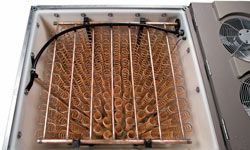
Ice is great for cocktails. It’s less obvious as a primary cooling source for a modern office building or suburban split-level. Yet, Ice Energy has proven that frozen water can drive air conditioning. Their system doesn’t replace your AC entirely. It works alongside it. The goal is simple: shift the heavy lifting to off-peak hours.
During the heat of the day, grids are strained. Homes and businesses crank up the units. This spikes power usage. Ice-powered systems change the game by freezing water at night. They store that ice. Then, during the day, the ice cools the refrigerant. The compressor stands down. This cuts overall energy consumption by about 30 percent.
How Ice Energy Systems Reduce Cooling Costs
The mechanism is straightforward. You don’t need a physics degree to grasp it. At night, the unit circulates refrigerant through copper coils. These coils sit inside a tank holding 450 gallons of water. The refrigerant pulls heat out. The water freezes.
Storage is key. The ice sits in the tank. When daytime heat arrives, the existing AC unit doesn’t run at full capacity. Instead, the ice cools the hot refrigerant. The building stays comfortable. The grid stays stable. You save money on electricity bills. This ice energy cooling system is particularly effective in regions with high daytime temperatures and lower nighttime rates.
The Green Coal Concept: Turning Pollution into Power
“Green coal” sounds like an oxymoron. Coal is notoriously dirty. It contains 25 to 90 percent carbon. Burning it releases carbon dioxide, sulfur, and nitrogen oxide. Those gases drive global warming. The science, however, offers a twist.
Scientists use a process called gasification. It strips oxygen from water using the carbon in coal. The result is clean-burning hydrogen gas. That gas can fuel a turbine. The turbine produces electricity. The emissions aren’t just vented. They are pumped underground. Other pollutants are converted into solids. Those solids can be burned. It’s a complex process. But it changes how we view fossil fuels.
DIY Wind Water Heating: A Sustainable Option
We know wind generates electricity. What about heat? You don’t need a massive windmill in your backyard. Oregon State University students proved this in 2006. They built a pint-sized wind turbine water heater.
This system is completely sustainable. Unlike traditional heaters using electrical elements or gas flames, this one relies on wind. It bolts to a rooftop. The key requirement? Enough wind to spin the turbine.
The mechanics are elegant. The turbine rotates magnets attached to a metal plate. Those magnets spin near a copper plate. Magnetic resistance warms the copper. Water pumped through copper tubing on the back of the plate absorbs that heat. The result is hot water. Theoretically, this hot water can circulate through the house. It becomes a source of heat. It’s a practical solution for windy locations.
Frequently Asked Questions
What are the initial costs of installing geothermal systems?
Geothermal systems are initially expensive due to the cost of drilling and equipment, often ranging from $10,000 to $20,000, but they can significantly reduce your long-term energy costs.
Are there any government incentives for installing solar heating and cooling systems?
Yes, many governments offer tax incentives, rebates and grants to offset the cost of installing solar heating and cooling systems, promoting their adoption.
Lots More Information