


















Забудьте про те, щоб перетягувати помаранчевий або зелений шланг травою. Якщо у вас є середній або великий газон, ви знаєте цю процедуру. Ви поливаєте одну ділянку. Переносьте шланг на наступний. Повторюєте, доки не заболить спина. Це втомлює. Це неефективно. Це призводить до перевитрати води на важкодоступних ділянках, тому що вам просто ліньки маневрувати шлангом туди.
Пересувні розбризкувачі вирішують цю проблему. Вони рухаються самостійно. Без батарейок. Без бензину. Без підключення до розетки. Тільки тиск води виконує всю тяжку роботу. Тракторна модель, найпоширеніший дизайн, який можна знайти в будь-якому магазині товарів для дому, це диво простої фізики. Вона перетворює ваш водолічильник на автономний двигун.
Двигуном є шланг
Ви можете подумати, що ці пристрої рухаються електродвигуном. Ви помиляєтесь. Привідний механізм повністю залежить від потоку води, що надходить у пристрій. У цьому полягає суть роботи пересувних розбризкувачів. Система захоплює вхідний тиск води та перетворює його на механічний рух.
Ось як це відбувається:
- Вода надходить до основного корпусу через гнучке з’єднання шланга.
- Потік прямує у маленьку турбіну або водяне колесо всередині корпусу.
- Це колесо обертається. Швидко.
- Колесо, що обертається, приводить в дію систему понижуючих передач.
Навіщо потрібні шестерні? Тому що турбіна обертається надто швидко. Занадто швидко для того, щоб ефективно обертати великі задні колеса. Шестерні уповільнюють обертання і збільшують момент, що крутить. Крутний момент — це сила, що обертає. Вам потрібен високий момент, що крутить, щоб штовхати важкий пластиковий ящик, наповнений водою, по нерівній місцевості.
Крутний момент і знижувальна передача
Коробка передач є серцем тракторного розбризкувача. Зазвичай вона виготовлена із міцного пластику чи металу залежно від цінового сегменту. Усередині ряд шестерень знижує швидкість. Уявіть велосипед. Ви перемикаєтеся на низьку передачу, щоб піднятися на крутий пагорб. Вам потрібна потужність, а чи не швидкість. Розбризкувачу потрібна потужність, щоб переміщатися вашим двором.
Головна шестерня з’єднана з віссю провідних коліс. Ці колеса зазвичай великі, пневматичні або цільногумові. Вони забезпечують зчеплення. Без гарного зчеплення пристрій буксуватиме на місці. Це поширена проблема на слизькій, мокрій траві.
Провідне колесо з’єднане з головним корпусом. Інші колеса є вільно обертовими опорними. Вони підтримують вагу. Ведуче колесо штовхає всю конструкцію вперед.
Механізми управління
Не весь рух відбувається автоматично. Вам потрібне управління. Більшість моделей включають дві ключові системи:
Регулювання швидкості
Ви можете регулювати швидкість руху розбризкувача. Це робиться за допомогою клапана на пристрої або шляхом зміни тиску води у крана. Якщо тиск води високий, турбіна обертається швидше. Шестірні передають цю швидкість на колеса. Пристрій рухається швидко. Це покриває більшу площу за менший час. Однак це менш ретельно. Якщо вода рухається дуже швидко, залишаються сухі плями. Правило просте: повільніше – краще для рівномірного покриття.
Система розвороту
Коли пристрій досягає кінця газону, він повинен розвернутися. Воно не може просто зупинитись. Привідний механізм включає зчеплення чи систему на пружинах. Коли пристрій досягає межі довжини шланга або спрацьовує ручний тригер, привід вимикається. Пристрій зупиняється. Потім важіль чи просте ручне штовхання повертає весь корпус
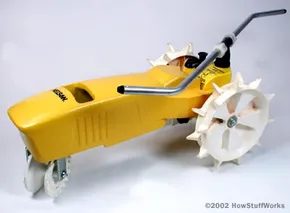
Тиск води не просто проштовхує її. Воно обертає механізми. У цьому полягає суть поворотного розбризкувача. Ви підключаєте його до садового шланга. Сила потоку приводить у дію просту трансмісію. Шестерні входять у зачеплення. Вал обертається. Колеса котяться. Це механічний рух, що повністю приводиться в дію гідравлічним тиском.
Одиниця в стилі трактора зводить конструкцію до самої основи. Сім деталей. Жодної електроніки. Жодних двигунів. Тільки фізика та пластик.
Основні компоненти
Ви бачите певне розташування деталей. Якщо одна з них виходить із ладу, весь механізм перестає рухатися.
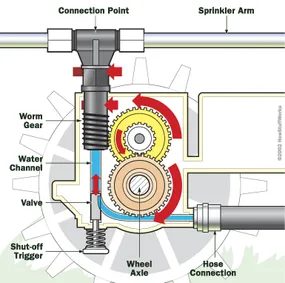
Складання розбризкуючої штанги є вихідною ланкою. Це труба, що обертається, яка розкидає воду дугою. Вона не обертається вільно. Нею надає руху механізм, що знаходиться позаду.
Черв’ячна передача – це серце редуктора. Вона розташована на валу. Вона приймає швидкий вхідний сигнал з низьким моментом, що крутить, від водяного приводу і знижує його швидкість. Саме тому розбризкувач рухається повільно. Він не мчить газоном. Він повзе.
Трансмісія з’єднує черв’ячну передачу з приводним механізмом. Вона передає цю перетворену енергію. Без неї колеса не знали б, що треба крутитися.
Три колеса забезпечують стійкість. Два задніх колеса та одне переднє поворотне. Цей трикутник утримує пристрій у вертикальному положенні. Якщо одне колесо заклинить, траєкторія руху зігнеться. Або пристрій перевернеться.
Поршень знаходиться в нижній частині. Він взаємодіє з гіркою (похилою площиною). Тут трапляється магія. Поршень – не просто пасивна деталь. Ним керує потік води. Під час руху він ковзає гіркою.
Гірка – це фіксована похила поверхня. Поршень тисне на неї. Ця взаємодія перетворює лінійний або коливальний рух поршня у обертальний рух валу. Це простий кулачковий механізм. Тиск води переміщує поршень. Поршень штовхає гірку. Гірка чинить опір. Вал повертається.
Підключення шланга є входом. Високий тиск тут означає більші зусилля на поршні. Більше зусилля означає швидше обертання шестерень. Занадто високий тиск може призвести до прослизання механізму або його передчасного зношування. Занадто низька — і колеса взагалі не обертатимуться.
Чому ця конструкція зберігається
Складні системи зрошення потребують таймерів. Їм потрібні джерела живлення. Їм потрібне програмування. Поворотному розбризкувачу потрібна лише вода. Він простий. Він ефективний.
Черв’ячна передача запобігає зворотному обертанню. Якщо тиск води знижується, колеса не просто крутяться назад. Вони блокуються. Це утримує розбризкувач на місці, якщо ви перекриваєте воду.
Конструкція з трьома колесами краще справляється з нерівним рельєфом, ніж візок на двох колесах. Переднє поворотне колесо адаптується до нерівностей. Задні колеса забезпечують привод. Вузол поршня та гірки герметично захищений від бруду знизу. Вам не потрібно щодня чистити пісок із шестерень.
Але це ідеально. Гірка зношується. Поршень зношується. Пластикові шестерні стираються за високого тиску. Необхідно контролювати тиск води. При потребі регулювати його. Регулятор тиску на крані допомагає. Він захищає внутрішній механізм.
Питання обслуговування
Коли колеса перестають обертатися, перевірте гірку. Шукайте сліди зношування. Поршень застряг? Очистіть його. Перевірте з’єднання шланга на сміття. Невеликий камінь може
Як тиск води приводить у обертання спринклер
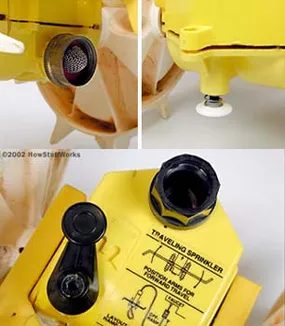
Більшість будинків отримують воду від муніципальних мереж з постійним тиском від 40 до 60 фунтів на квадратний дюйм (psi). Цей тиск не зникає, коли ви відкриваєте зовнішній кран. Воно проштовхує воду по шлангу і в головку спринклера, що обертається. Усередині вода проходить через трубу і виходить через дві розбризкуючі насадки.
Фізика обертання
Вода виривається назовні, і набирає чинності третій закон Ньютона. Кожній дії є рівна та протилежна протидія. Сила штовхає воду назад, штовхає насадки вперед. Це той самий принцип, який запускає ракети.
Насадки вигнуті під кутом. Така конструкція забезпечує вплив сили на насадки у певній точці. Оскільки насадки спрямовані в протилежні сторони, сили підсумовуються, створюючи крутний момент. Уявіть собі карусель, що рухається водяними струменями. Результатом є обертання.
Механізми, що стоять за обертанням
Ці насадки, що обертаються, не просто переміщують воду. Вони з’єднані з черв’ячною передачею всередині корпусу спринклеру. Коли насадки обертаються, вони рухають черв’ячну передачу. Ця передача зачіпляється з іншою шестернею в трансмісії.
Трансмісія є простою зубчасту передачу. Вона приймає крутний момент від черв’ячної передачі і передає його на ведучий вал. Цей вал обертає задні колеса газонокосарки-трактора. Чим швидше тече вода, тим швидше обертаються насадки і швидше крутяться шестерні. Це прямий механічний зв’язок між тиском води та обертанням коліс. Жодних батарей. Жодного палива. Тільки фізика та сантехніка.
Чому ця конструкція важлива
Ви можете поставити запитання, навіщо простому спринклеру потрібні шестерні. Без черв’ячної передачі насадки оберталися б надто швидко для рівномірного розподілу води. Шестерні уповільнюють обертання. Вони також забезпечують множення крутного моменту. Це гарантує плавне обертання головки спринклеру навіть за високого тиску води.
Трансмісія дозволяє регулювати швидкість. Деякі моделі дозволяють змінювати передатне відношення шестерень. Це змінює швидкість обертання спринклеру. Повільне обертання означає більше води на квадратний фут. Швидке обертання покриває більшу площу, але залишає сухі плями.
Поради з обслуговування
Сміття може заклинити черв’ячну передачу. Пісок, бруд та скошена трава засмоктуються в систему. Регулярно перевіряйте фільтр. Очищайте насадки спринклера за допомогою маленької щітки. Видаляйте мінеральні відкладення з форсунок. Жорстка вода може засмічити крихітні отвори. Замочування в оцті допомагає.
Якщо насадки не обертаються, перевірте трансмісію. Шукайте зношені шестірні. Черв’ячна передача зазвичай пластикова. Згодом вона може стертися. Замініть її за потреби. Підшипники ведучого валу повинні обертатися вільно. Змастіть їх, якщо вони скриплять.
Безпека та ефективність
Високий тиск води може пошкодити насадки спринклера. Встановіть регулятор тиску, якщо тиск у вашому будинку перевищує 60 psi. Це захистить внутрішні шестірні. Це також заощадить воду. Надлишковий тиск призводить до утворення туману. Туман випаровується, не досягаючи трави. Ви витрачаєте воду. Ви витрачаєте гроші.
Обертова головка спринклеру ефективна при належному обслуговуванні. Вона поступово покриває кругові ділянки. Порівняйте це зі стаціонарними спринклерами. Стаціонарні головки часто залишають кути сухими. Обертальний рух насадок спринклеру забезпечує повне покриття. Це
Як передавальні числа регулюють швидкість переміщення
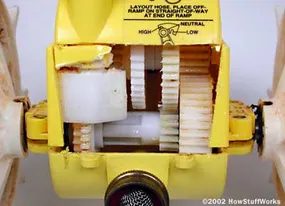
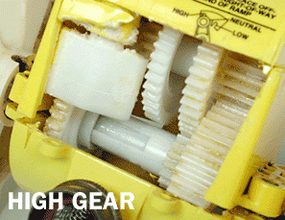
Більшість спринклерів для газонокосарок-тракторів використовують просту триступінчасту коробку передач, хоча деякі конструкції повністю виключають змінні налаштування. Зазвичай доступні високі, низькі передачі та нейтральне положення. Нейтральне становище означає саме те, що звучить: трактор стоїть на місці, доки вода продовжує надходити. Перемикання передач фізично включає або вимикає зачеплення шестерень різного розміру. Це змінює передатне число, яке визначає швидкість обертання провідних коліс.
Уявіть собі коробку передач автомобіля, але що рухається в екстремально уповільненій зйомці. Ціль полягає не в прискоренні, а в покритті площі. Більшість таких пристроїв рухається зі швидкістю близько 60 футів на годину. Така швидкість забезпечує проникнення води у ґрунт, а не просто стік по поверхні. Задні колеса забезпечують крутний момент. Вони відштовхуються від землі. Переднє колесо діє як напрямне, рухаючись прямо вздовж лінії шланга, щоб запобігти заплутуванню.
Механіка автоматичного відключення
Коли трактор досягає далекого кінця зони дії шланга, він повинен зупинитись. В іншому випадку ви затопите свою під’їзну доріжку або паркан сусіда. Прості моделі використовують механічний тригер. Ви встановлюєте невеликий трамплін на краю зони поливу.
Коли пристрій наближається до межі, переднє колесо накочується на трамплін. Задні колеса залишаються на рівній поверхні, охоплюючи перешкоду з боків. Ця різниця у висоті штовхає “пружинний поршень” на нижній частині корпусу трактора. Поршень як зупиняє колеса, а й перекриває потік води. Він фізично блокує воду від попадання на насадки, що розбризкують. Трактор зупиняється. Цикл завершується.
Це просте перетворення гідравлічного тиску у момент обертання. Жодної електроніки. Жодних батарей. Тільки тиск води, шестерні та поршень.
Ось і все. Це просте перетворення сили тиску води у момент обертання на колесах.
Якщо ви плануєте встановити це самостійно, ключовим моментом є правильне розміщення трампліну. Він повинен бути досить міцним, щоб трохи підняти шасі, але досить гладким, щоб переднє колесо не підстрибувало і не стрибало. Нестабільний трамплін призводить до нерівномірного поливу і може зашкодити механізм поршня.
Для тих, хто цікавиться фізикою, що лежить в основі, принципи крутного моменту і передачі енергії тут застосовні так само, як і в більшій техніці. Шестерні знижують швидкість, але збільшують момент, що крутить, необхідний для переміщення важкого, наповненого водою пристрою по нерівній місцевості.
Якщо ви хочете глибше розібратися в тому, як ці системи порівнюються зі стаціонарними моделями, що осцилюють, або як саме передавальні числа впливають на ефективність, існує безліч ресурсів. Ви можете вивчити, як гідроелектростанції керують аналогічними зубчастими передачами, або ознайомитися з конкретними оглядами продуктів від постачальників, таких як Sprinkler Warehouse. National Walking Sprinkler і Nelson Rain Train – два приклади, які використовують ці ж механічні принципи у більшому масштабі.