A summer thunderstorm is just weather. Until it isn’t.
The heat brings sudden storms. Power grids falter. Lights flicker back on quickly. Your television still works. Your fridge keeps humming. But somewhere in the technical corner of your home, a silent disaster has occurred.
It doesn’t scream. It doesn’t leak. It just quietly drains your bank account.
You won’t notice for weeks. The first sign is usually a shock when the monthly energy bill arrives. That’s when you realize a simple power cut turned your essential equipment into a financial sinkhole.
The Invisible Cost of a Power Outage
We focus on the obvious stuff during a storm. Checking for broken windows. Wiping up water. Replugging the TV.
But the real damage often hides in plain sight. It happens in the mechanical room. Or the bathroom closet. Or the utility nook.
When power returns, machines restart. But not all restarts are clean.
Your thermodynamic water heater is one of those machines. It’s smart. It’s efficient. But it’s also fragile when the grid trips.
The issue isn’t the hardware breaking. It’s the software forgetting.
The surge resets the internal clock. The memory wipes. The settings vanish. And without you knowing, your water heater starts running at full blast. Even at noon. Even when you don’t need it.
Why Your Water Heater Runs All Day
Here is the mechanics of the mistake.
Most modern thermodynamic water heaters rely on a digital interface. They have an internal clock. This clock is tied to your electricity provider’s pricing tiers.
You pay less for electricity during “off-peak” hours (usually night). You pay more during “peak” hours (daytime).
The heater is programmed to heat water only during the cheap hours. It stores that hot water. You use it during the day. Simple. Efficient. Cheap.
Then, a storm hits.
Power cuts. Total blackness.
When electricity returns, the water heater boots up. It has no idea what time it is. It defaults to a factory reset state.
The clock resets. The schedule deletes itself.
Now, the heater assumes it’s in “manual” or “continuous” mode. It keeps heating the tank to the maximum temperature. Constantly. 24/7.
So while you’re at work or sleeping, the unit is fighting to keep water scalding hot. Against the sun. During the most expensive hours of the day.
It’s heating water you don’t need. When energy costs the most.
That’s why your bill spikes. It’s not a leak. It’s a scheduling error.
How to Stop the Financial Bleed
You don’t need a technician. You don’t need to call the electric company.
You just need to look at the panel.
Most water heaters have a simple control board on the front. It’s minimalist. Often just a few buttons and a small LCD screen.
Here is exactly what you need to do to fix the water heater clock reset issue and stop the waste.
- Check the Time and Date. Look at the screen. Does it say 12:00 AM? Or 00:00? Or does it blink? That’s the problem. The clock is gone. Set it to the correct current time and date. Use the manual buttons. Don’t skip this.
- Verify “Off-Peak” Settings. Once the clock is set, check the program menu. Ensure the “Heures Creuses” (off-peak hours) are still active. If the reset wiped the profile, you may need to re-enter them. Match them to your local utility’s schedule.
- Cancel “Boost” or “Force” Mode. After a power loss, many units default to a “Boost” mode. This heats water as fast as possible, ignoring schedules. It’s a safety feature. Turn it off. You want “Automatic” or “Programmed” mode, not “Force.”
Why This Matters Now
Summer is hot. You might think, “I don’t need hot water that hot in July.”
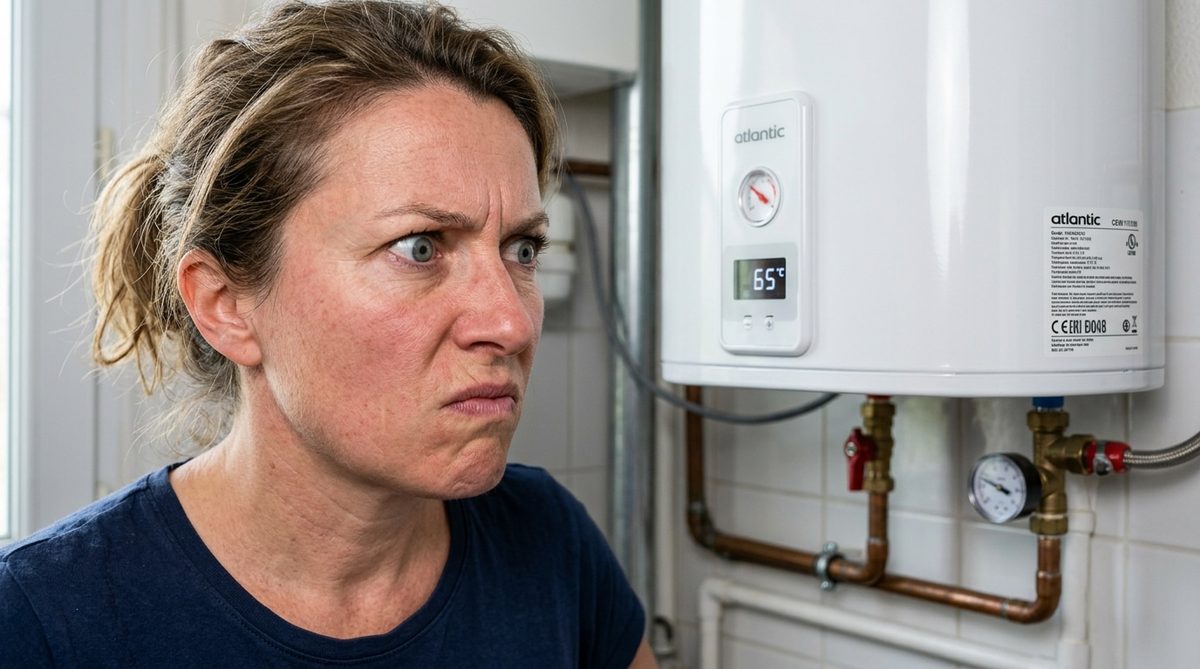
That’s true. But the heater doesn’t know that. If it’s set to 65°C (149°F) and running 24/7, it’s wasting massive amounts of energy.
By resetting the clock and restoring the schedule, you align the machine with your habits.
It heats at night. It stays cool during the day. You save money. You reduce strain on the grid. And you stop staring at your bill in confusion.
This isn’t just about money. It’s about control.
A storm takes away control. But a five-minute check on your control panel puts it back.
Don’t wait for the bill. Check the clock. Especially after the next thunderstorm.
The weather is out of your hands. The settings are not.