It’s easy to think of your washing machine as a set-and-forget appliance. You toss in the winter sweaters. You grab the detergent. You pour in what feels like a healthy dose because, let’s be honest, you’re worried the clothes won’t get clean. You assume more soap equals better results.
It doesn’t.
This reflex is costing you money and ruining your clothes. Instead of fresh linens, you end up with dull fabrics, stained whites, and a machine that’s slowly clogging up. The truth is counterintuitive. To get truly clean laundry, you have to stop trusting your instinct and start trusting the mechanics.
The Foam Paradox: Why More Soap Isn’t Cleaner
There is a persistent myth that thick suds equal cleanliness. It feels satisfying to see bubbles rising. But in a modern washing machine, that foam is actually working against you.
Effective cleaning isn’t just about chemistry. It’s a three-way battle between chemical action, water temperature, and friction. The mechanical agitation of clothes rubbing against each other is what physically dislodges dirt and grime.
When you overload the drum with detergent—whether liquid or powder—you create a cushion of suds. This foam isolates the fabric. It prevents the clothes from scrubbing each other. You are essentially wrapping your laundry in bubble wrap and wondering why the dirt stays put. The result? Your clothes come out looking gray and feel sticky or stiff. The soap trapped in the fibers never actually rinses out.
Modern rinse cycles aren’t designed to handle an excess of surfactant. They’re calibrated for moderate loads. When you dump in double the recommended amount, the water can’t penetrate the soap-saturated fibers. This is especially bad for dark clothes, which often show white streaks or a chalky haze. It’s not just about looking bad. It’s about the buildup.
The Hidden Cost to Your Machine and Skin
The damage doesn’t stop at your wardrobe. That excess soap has to go somewhere. It doesn’t vanish. It settles into the pump filters, the drain hoses, and the internal seals of your washing machine. Over time, this residue hardens. It creates a film that traps moisture and bacteria. You’ll start noticing strange smells. You might see leaks. You’ll be calling for repairs sooner than you should have to.
And it’s not just the hardware. It’s your skin. If your clothes aren’t rinsing properly, that chemical residue stays in contact with your skin. For people with eczema, sensitive skin, or allergies, this is a major trigger. Itchy rashes and irritation often have nothing to do with the fabric and everything to do with the leftover detergent.
How to Fix the Dose Without Losing Cleanliness
You don’t need to guess. You need to measure.
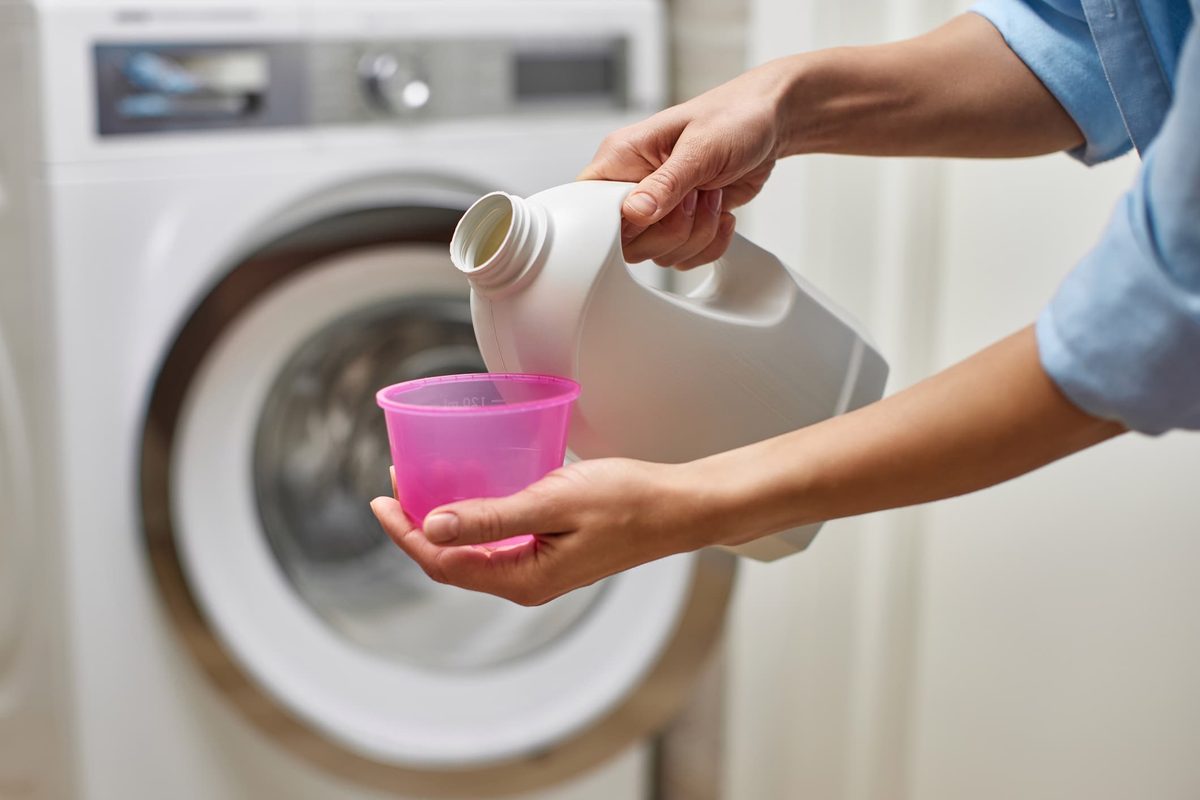
Most modern detergents are highly concentrated. The measuring cap is not a suggestion. It’s a limit. Start by using half the amount the bottle recommends. See what happens.
If your clothes still come out clean (and they likely will, if you’re getting enough friction), stick with it. You’ll save money. You’ll protect your machine. Your skin will thank you.
What If Clothes Aren’t Getting Clean?
If switching to a lower dose results in dingy towels or smelly gym clothes, the problem isn’t the soap amount. It’s likely elsewhere in the process.
- Check the temperature: Some oils and bacteria need hot water to break down.
- Don’t overload the drum: Clothes need room to move. If the drum is packed tight, friction drops to zero. No friction, no cleaning.
- Clean the filter: A clogged pump filter restricts water flow and rinse efficiency.
- Use the right cycle: Heavy soils need longer wash times or pre-wash cycles, not more soap.
Stop pouring. Start measuring. Your laundry, your wallet, and your washing machine will all be better for it. The foam isn’t the goal. Clean clothes are.

The hidden cost of over-soaping
You think suds mean clean. They don’t. They mean residue. When you drown your laundry in detergent, the rinsing cycle rarely catches everything. Chemicals stay trapped in the fibers. Wear that shirt tomorrow. Your skin will protest. Especially if you have sensitive skin or kids. The itch isn’t always allergy. It’s soap left behind.
That rough texture you blame on hard water? It’s likely unflushed detergent. You can fix this by rinsing better. Run empty cycles with white vinegar. It dissolves the gunk. But the damage goes deeper than just your skin.
Your washer hates excess soap too. The gunk doesn’t vanish. It piles up. It hides in the door seal. It coats the dispenser drawer. It cakes inside the drum. This sludge creates a breeding ground for bacteria. Biofilms form. They smell like wet dog and mildew. Standard cleaning cycles struggle against this buildup.
Filters get clogged. Pumps fail. You end up replacing a machine that was just choked by your own habits. Stop feeding the beast. Use less.
The tablespoon rule for modern formulas
Old habits die hard. We still fill the little plastic cap to the brim. That cap is a relic. Modern detergents are potent. They don’t need buckets.
Here is the benchmark. For a standard 5 kg load. Use between 15 and 30 ml. That’s one to two tablespoons. Nothing more. Going over 40 ml is pointless. It creates more suds than the machine can handle. It leaves more residue on your clothes.
Stick to the tablespoon method. You’ll get a proper agitate rinse cycle. Your clothes will be softer. You won’t need fabric softener. Quality beats quantity every time.
But it’s not one-size-fits-all. Adjust slightly based on these factors:
- Water hardness: Hard water might need a tiny bit more detergent to cut through minerals.
- Soil level: Gym clothes? Maybe a bit more. A lightly worn blouse? Less.
- Load size: Don’t dose a full 9 kg drum like it’s a small wash. Match the volume to the load.
This isn’t just about clean clothes. It’s about preserving your machine. And your wallet. Less soap means less wastewater pollution. It means lower grocery bills. Give it a few cycles. You’ll notice the difference. Your laundry will feel crisp. Not sticky. Not chemical-heavy.
Why less is more (and how to finish the job)
Switching to a minimalist approach is a small change with big returns. You save money. You save the environment. You extend the life of your appliance.
But what about the softness? You miss the luxury of commercial fabric softeners. You don’t need them. Consider white vinegar. It neutralizes odors. It breaks down residue. It acts as a natural softener.
Try swapping your chemical softener for a cup of vinegar in the rinse cycle. Your sheets will smell like nothing. And feel like clouds. The transition might feel weird at first. But your skin and your machine will thank you later.
The goal isn’t just cleanliness. It’s balance. Stop guessing. Start measuring. See what happens when you let the water do the work.